About
Hi, I’m David.
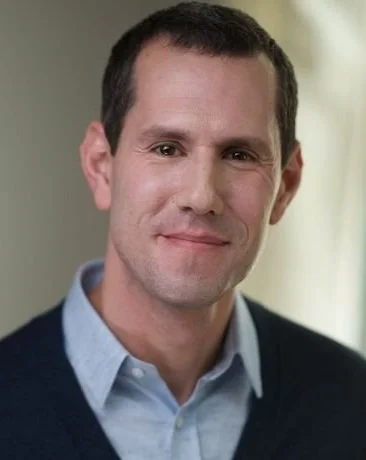
David Klein, LCSW
Licensed Clinical Social Worker
Licensed in California & New York
Fully online practice
Sessions for California & New York residents
Hi, I'm David.
I've been a therapist since 2006. Early in my career I worked in outpatient and inpatient settings, including work with children and their families — among them inpatient child psychiatry, where my role was supporting children and the parents raising them rather than treating the children directly.
In 2012 I opened my own private practice. I began training in Emotionally Focused Therapy (EFT) in 2014 and have stayed with it ever since — years of couples work taught me how attachment ruptures actually move between two people, and it's the method I now bring to co-parents and to the endings of relationships. But the center of my practice has always been individual, felt-sense work: helping one person find what a loss is doing inside them, before it even has words. Over time, that's turned increasingly toward the particular grief that separation and divorce leave behind.
I'm a certified Focusing-Oriented therapist — it's the approach I've trained in most deeply and the one my individual work is built on — and my training also includes Emotionally Focused Therapy and Emotionally Focused Family Therapy. They start from the same premise: attachment needs don't switch off just because a relationship has legally or practically ended. Underneath the detachment — the distance, the conflict, the surface-level "we're done" — there's very often an attachment system still searching for security, still trying to find its footing. My work is to help you locate that directly: in yourself, in your relationship with your child, or between co-parents.
I'm also a gay man, and it informs how I hold this work. The end of a relationship is already a loss our culture struggles to make room for — and when the relationship didn't fit the standard script, that recognition tends to shrink further still. The particular shape a relationship took, the assumptions people bring to it, the quiet sense that its ending doesn't count quite the way a marriage is "supposed" to — I know those facets from the inside, and I can sit with them without needing them spelled out.
I practice fully online, with sessions for residents of California and New York. I've worked this way since 2017, which tends to make it more workable for people whose schedules, housing, and weeks with their kids are all in the middle of changing.
Education & Training
- Certified Focusing-Oriented Therapist — The Focusing Institute
- Certified Advanced Grief Counseling Specialist — Evergreen Certifications
- Licensed Clinical Social Worker — practicing since 2006
- MSW — Columbia University
- Emotionally Focused Therapy (EFT) — extensive, ongoing training since 2014
- Emotionally Focused Family Therapy (EFFT) — Foundations & Essentials
- Early career in outpatient and inpatient settings, including inpatient child psychiatry
My Approach
Sessions are collaborative and fairly direct. I’ll often ask you to slow down and notice what’s happening in your body as much as what you’re thinking — that’s the Focusing-Oriented part — while tracking the attachment patterns underneath the story you’re telling me. I work with compassion, curiosity, and a little humor, starting where you actually are rather than where you think you should be by now.